
Miroslav Klose: A Steady Hand in Germany's Coaching Landscape
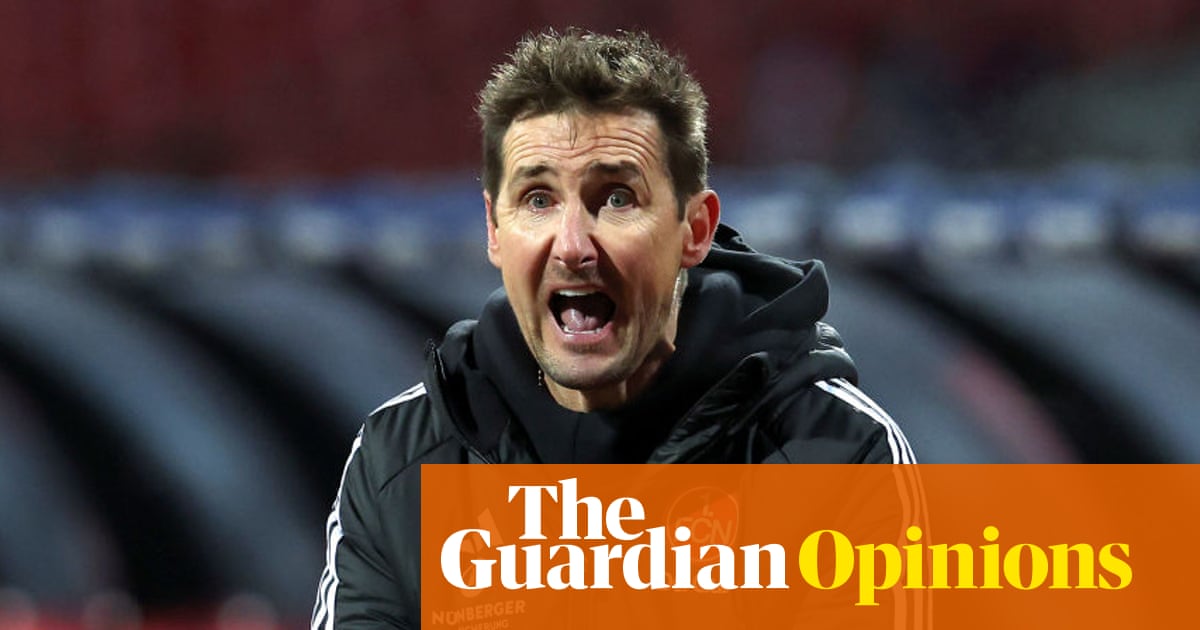
Miroslav Klose is carving out a unique path in the German coaching scene. Now leading Nürnberg, he understands the importance of consistency and identity in a time when many coaches seem to lack professional playing experience and frequently switch tactics.
You learn from the best, and Klose is drawing inspiration from football’s giants. Take Paris Saint-Germain, for instance, who are on the brink of a historic hat-trick in the Champions League. If they pull it off, they’ll join Real Madrid as the only teams to achieve this since the tournament's rebranding in 1992.
Looking at PSG's success, they mirror Real Madrid’s approach, having fielded nearly the same lineup for their title victories. The only notable absence during their title defense came when Gianluigi Donnarumma was replaced as goalkeeper. This focus on continuity is key.
Historically, football has thrived on stability. Teams like Ajax and Bayern Munich had players who consistently appeared in multiple finals. Madrid’s own record boasts several players who featured in their five consecutive wins during the late 1950s. It’s a formula that combines player selection with continuity for success.
Today’s top managers have internalized this strategy, as seen in clubs like PSG, Arsenal, and Barcelona. Each relies on a core group of six to eight players to create a strong team identity, supported by a rotating group of regular starters and squad players. In total, about 16 players form the backbone of these squads, with others providing depth.
The distribution of playing time is telling: core players log 70 to 85% of minutes, while regular starters see between 50 to 60%. Squad players get around 40 to 45%, leaving fringe players to share a mere 20% of available time.
Another trend is the commitment to a ball-oriented defensive strategy, with managers preferring rigid formations like 4-3-3 or 4-2-3-1 and making like-for-like substitutions to maintain structure.
Encouragingly, clubs like Arsenal are also reserving spots for promising young talents, often homegrown. At Arsenal, Myles Lewis-Skelly is making a name for himself at just 20 years old, showcasing how these principles can work across various levels.
Yet, Germany seems to be diverging from this successful blueprint. Three key differences stand out: a surprising revival of man-marking, a reluctance to promote homegrown talent despite investment in academies, and a host of managers lacking professional playing backgrounds.
These coaches often shift systems mid-match, and some, like Julian Nagelsmann, have struggled with consistency, impacting their teams negatively.
Miroslav Klose stands out as a notable exception. Having shared the pitch with him in over 80 international matches, I know firsthand that he is a team player who understands the intricacies of collective success. A World Cup winner and the tournament’s record goalscorer until last summer, Klose embodies the qualities that make a great manager.
In his third season at Nürnberg, he’s leading the charge as they aim for promotion in the 2. Bundesliga. What’s refreshing is his commitment to simplicity. He doesn’t complicate tactics or frequently alter his lineup, focusing instead on identifying players who meet the club's needs.
Klose has built a stable core, with players like winger Mohamed Zoma and attacking midfielder Julian Justvan logging 90% of available minutes. Central midfielder Finn Ole Becker also made a significant contribution until injury struck. Klose quickly found his preferred back four after a summer reshuffle, demonstrating his ability to adapt without losing sight of the bigger picture.
He’s also unafraid to trust young talent, sticking with academy graduates like Tim Janisch and Eric Porstner despite their early mistakes. Since the start of the year, young striker Piet Scobel has appeared consistently, further emphasizing Klose’s commitment to nurturing talent.
Klose’s understanding of the club’s identity shines through, evident in his choice to appoint local hero Jan Reichert as captain. At Nürnberg, Klose’s presence has created a stable environment where growth can flourish.
The club, which has spent much of the last decade in the second tier, is starting to capitalize on its rich heritage. With a history that includes only Bayern Munich winning more German league titles, and the legacy of Max Morlock scoring the first goal for Germany in a World Cup final in 1954, Nürnberg has immense potential.
Under Klose, the future looks bright for a club ready to reclaim its place in German football.